More open. More free.
Automotive software - built by everyone.

Yoriito is an open-source project promoted by JASPAR (Japan Automotive Software Platform and Architecture), with participation from leading automakers, suppliers, and software companies worldwide.
Through collaboration driven by software development, Yoriito aims to transcend industry boundaries, co-create an innovative mobility society, and build an ecosystem that cultivates future-ready talent.
Latest News/Events
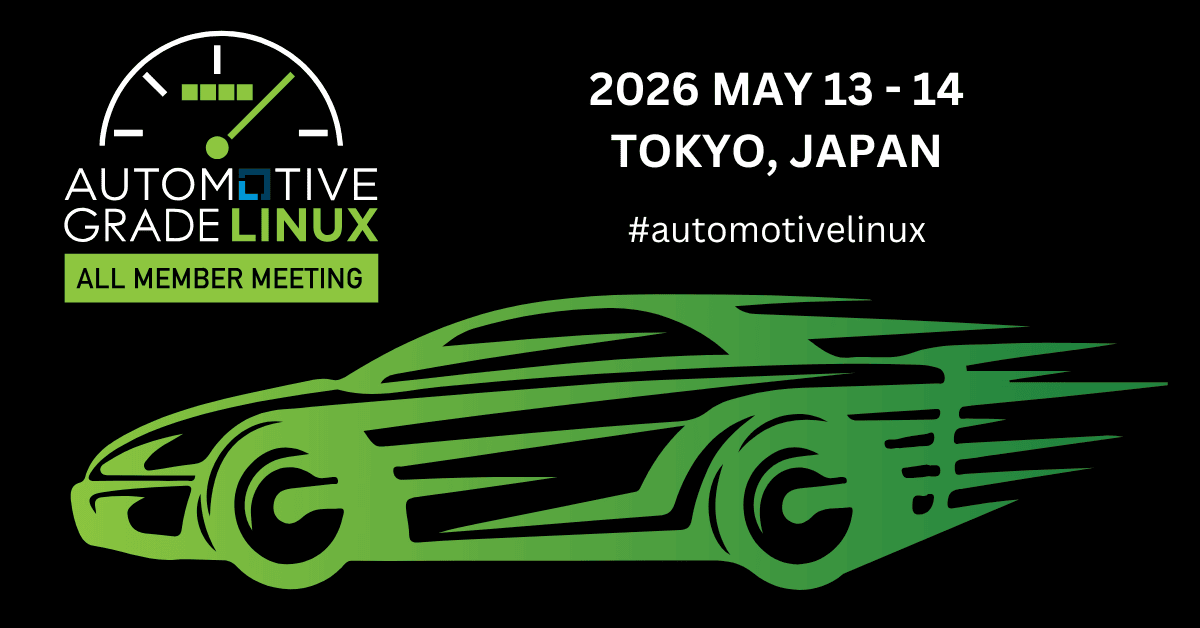
AGL All Member Meeting Spring 2026 @ Tokyo, Japan
JASPAR will provide its API deliverables as open source, which could be interesting to established AGL open source community experts. [A...

COVESA All Member Meeting Spring 2026 @ Porto, Portugal
On 22nd April, JASPAR will showcase its API deliverables as open source for the first time ever, and share its vision for future collaboration with CO...
Project Overview
Background
The automotive industry is undergoing structural transformation driven by advances in digital technologies such as autonomous driving.
At the same time, end-user needs are becoming increasingly diverse in terms of customization, real-time responsiveness, safety, and convenience.
In response to these changes, Software-Defined Vehicles (SDV) have rapidly gained attention in recent years, shifting the core value proposition toward software.
Treating the car as a platform enables players beyond the traditional automotive industry to develop novel vehicle services and content, inviting new entrants related to software development.
A cross-industry, cross-company collaboration platform has become essential.
Past Activities
February 2025
Launched the API WG under JASPAR and began activities. A broad range of companies—centered on OEM, suppliers, and software firms—joined, expanding the scale of the effort.
April 2026
Published outputs as open source under the name Yoriito, aiming for further growth as an open-source project.
Direction of Activities
Yoriito aims to establish a cross-industry, cross-company collaborative foundation in SDV.
Multiple companies across the industry form an open community and collaborate on development.
Activities
01
Standardized API & Dev Environment
As a first step, we are implementing industry-standard APIs for in-vehicle software and building the development environment.
02
Yoriito Vehicle API
Enables OEMs, suppliers, and third parties (application developers) to develop, validate, and deploy via a shared interface by abstracting vehicle functions and defining consistent behavior.
03
Future Activities
Other activities are currently under consideration.
Scope
Standardized API
-
Yoriito Vehicle API is organized by responsibilities and developer ergonomics:
-
Access API (high-level, experience- and efficiency-oriented):
Developer-friendly composites that combine multiple signals into intuitive domain operations. Designed for clarity and efficiency in app code.
*The Access API is currently under consideration and is not included in the latest release. -
Signal API (low-level, asynchronous, embedded-oriented):
Direct access to vehicle signals and actuators with Get/Set/Subscribe/Unsubscribe. Under-the-hood transports (e.g., CAN, SOME/IP, DDS) are abstracted while behavior and timing are specified.
-
-
PAL (Platform/Porting Abstraction Layer API):
Mediates between the standardized Yoriito Vehicle APIs and OEM- or ECU-specific implementations. PAL is responsible for mapping abstract signals and operations to concrete vehicle buses, ECUs, and platform services, so that application code and API behavior remain stable even as hardware, network topology, or supplier components differ between vehicle lines. -
Communication backend (Communication Layer):
An abstraction layer that standardizes communication and data specifications to interconnect the Signal API, Access API, and PAL, while hiding their implementation. The standardization takes COVESA VISS v3 as a reference.
Development Environment
-
SDK and runtime:
common async primitives, subscription management, typed results, and uniform error vocabulary. -
Samples:
minimal, idiomatic examples for typical use cases (e.g., door lock, air‑conditioning control) that illustrate best practices for capability/availability checks and error handling. -
Simulator:
validate behavior and app logic before hardware access; supports regression and portability checks.
Deliverables
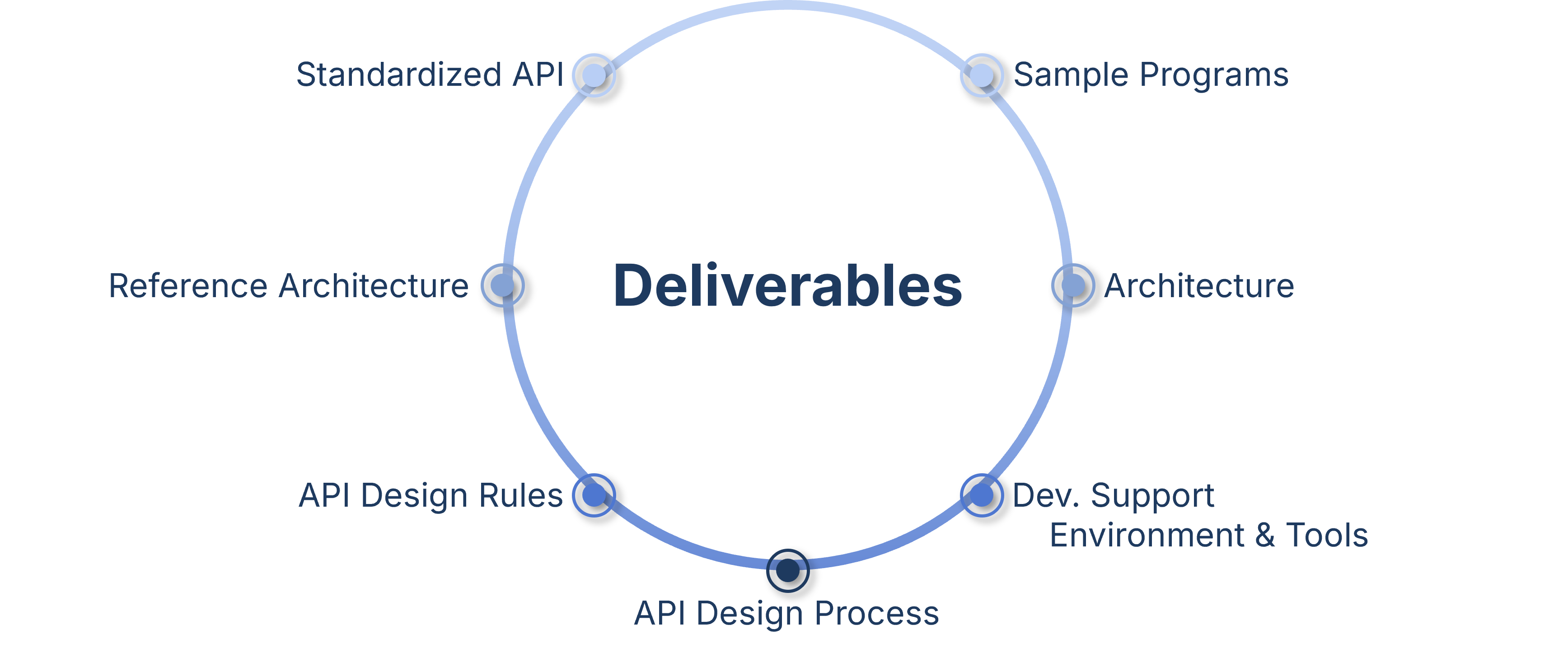
- Standardized API
Source code and specifications for the standard APIs - Reference Architecture
A logical reference architecture for integrating the standard APIs - API Design Rules
Concrete design rules to ensure consistency, reusability, and safety -
API Design Process
An efficient process covering use-case definition through API implementation and validation -
Dev. Support Environment & Tools
Software development environment and tooling - Architecture
Yoriito VSS, Yoriito VISS, Yoriito VISS Server (Yoriito Kura) - Sample Programs
Headless app, GUI app, PAL implementation samples
Yoriito Kura

A software component, custom-developed based on COVESA VISS 3.0 specification, that retrieves, manipulates, and manages the custom data model Yoriito VSS.
It is implemented in Rust and includes Set/Get/Subscribe APIs as well as custom extensions such as Inspect and Define APIs.
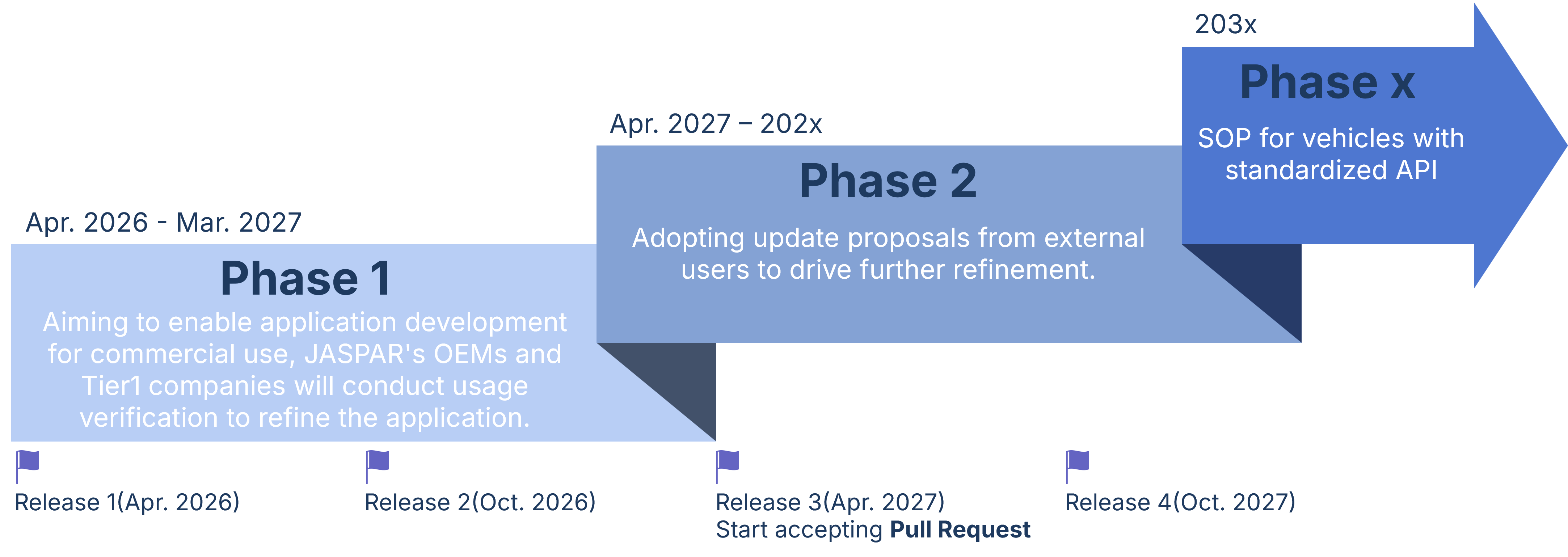
Roadmap